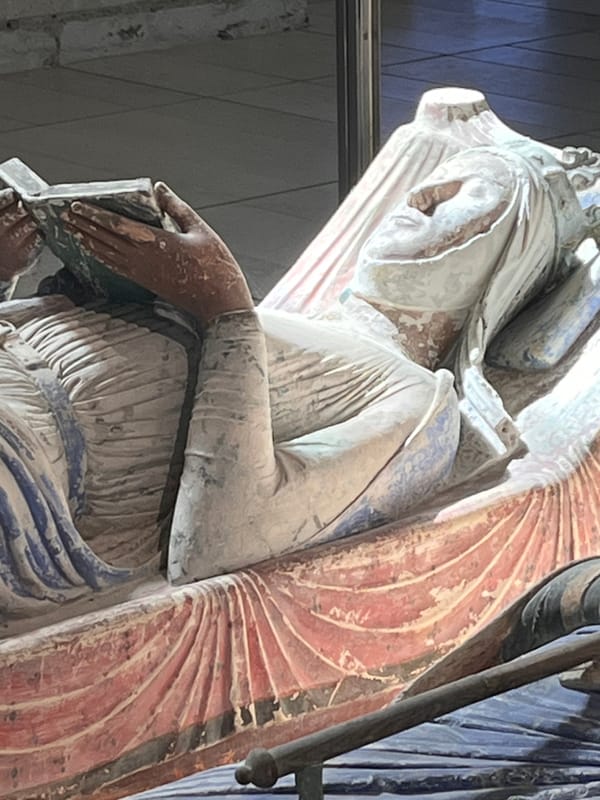
Looking for Eleonore in Poitiers

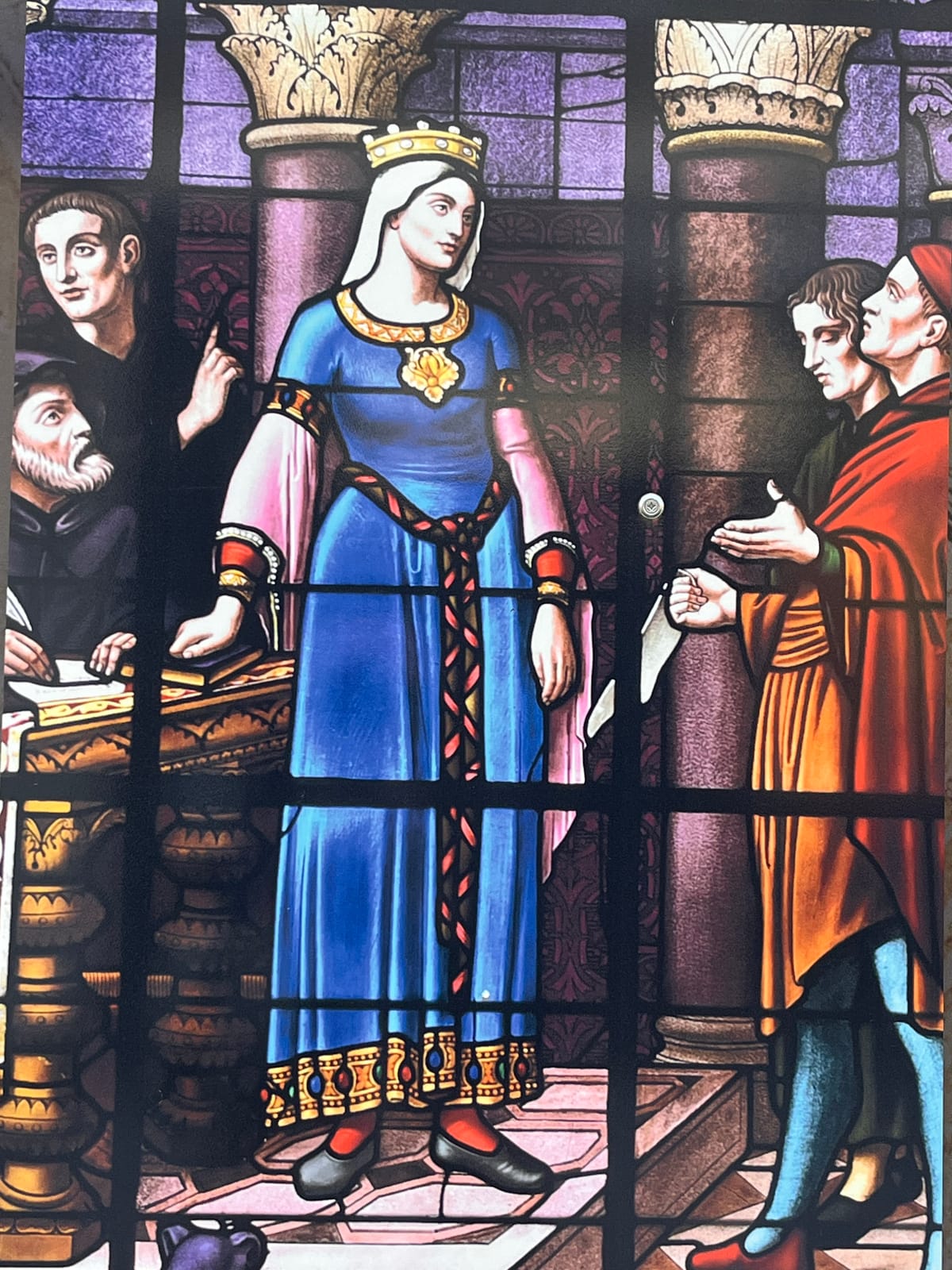
Have to say I’m rather fascinated by this woman, her story, her family. There’s so much of it! And only so much you can learn reading books, for me at least the story only really starts to make sense when you can touch it in some way.
So I took myself into Poitiers for the day to see what parts of the story I could find there.
Starting point was that I had some idea Eleonore of Aquitaine was born here, or at least grew up here, was married here, spent some time with some of her children here, and possibly even died here before being entombed at Fontevraud.
And given all this took place nearly a thousand years ago, there’s probably a lot of studious guesswork involved by generations of historians and storytellers. So I got myself sorted over a sunny beer in the square and set out to have a look.
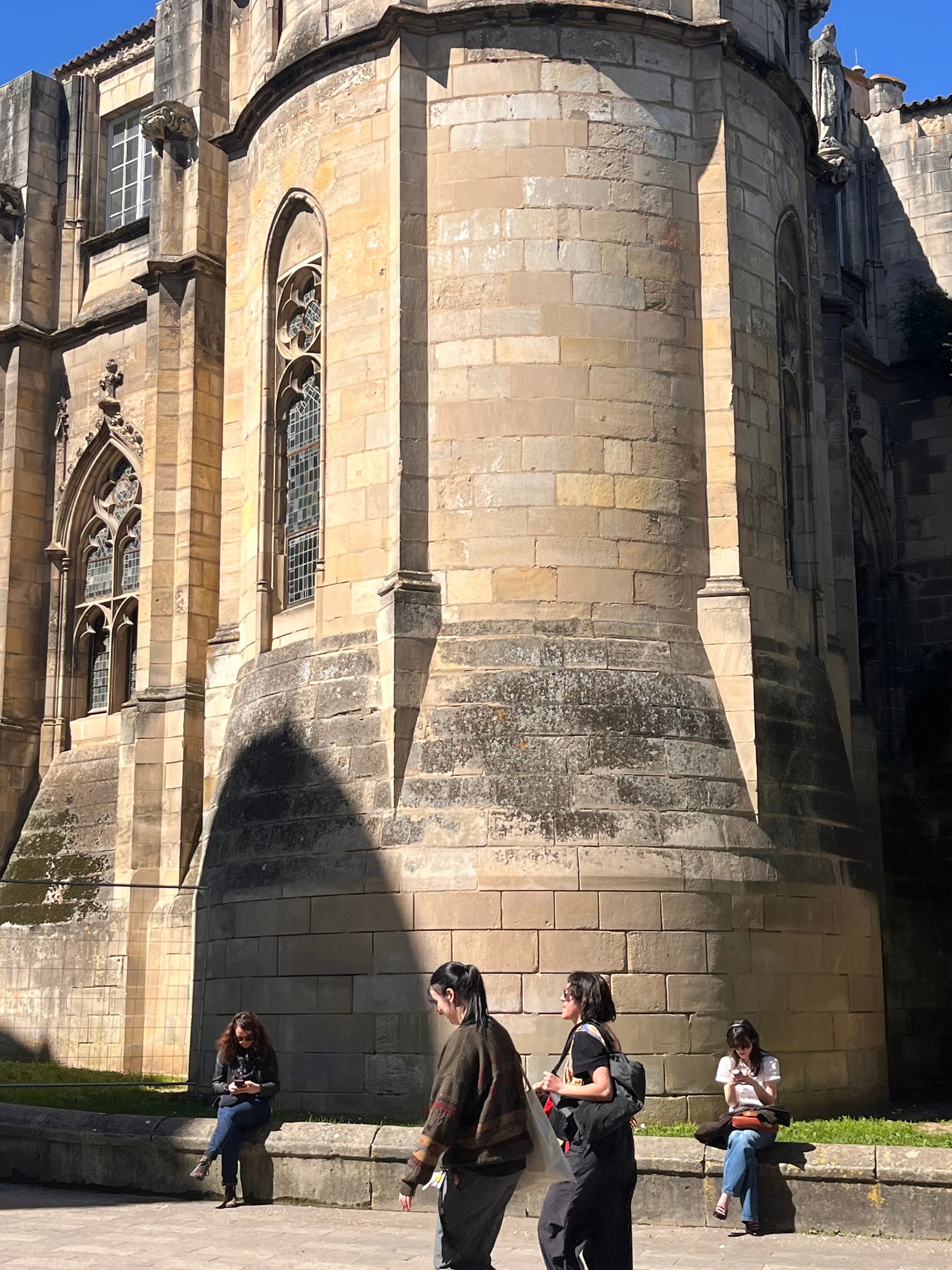
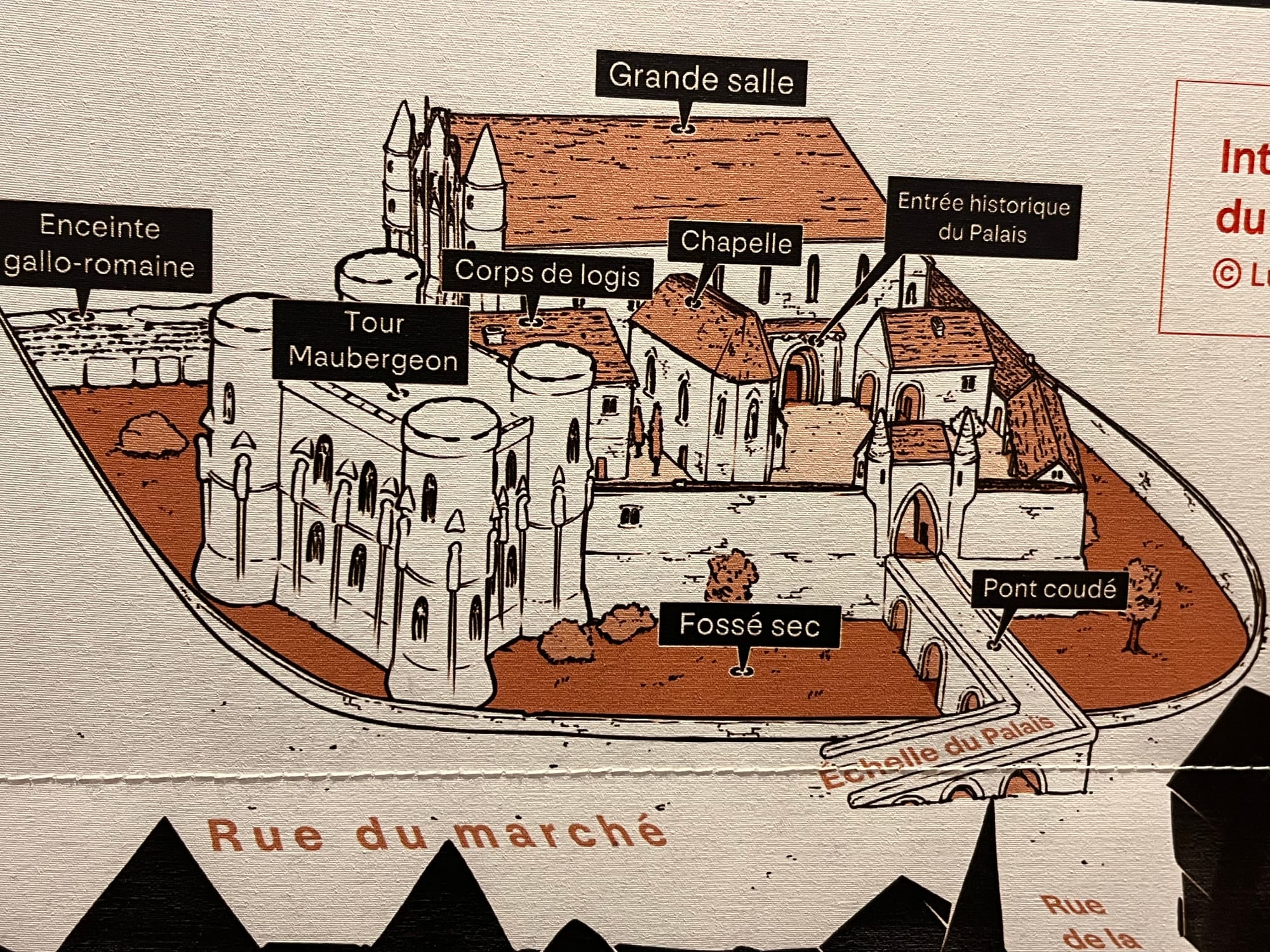
And up the stairs from my cafe was the old ducal palace! At the top of the rather pointy hill that Poitiers sits on. It’s having a big facelift at the moment, so lots of cranes and busy workmen, and no doubt archaeologists underground. But yes, this is where Eleonor grew up (and maybe born), in a court of troubadours and great local power.
It was all marvellous until her much-loved father died, on crusade, when she was just 15. She’d already lost her mother. Obviously a young woman couldn’t be expected to manage the vast duchy alone, so five minutes later she was married off. To a french prince called Louis. And five minutes later again, he became king (Louis VII) when his father died. Which meant that, still just 15, she was both queen of France and duchess of Aquitaine. Phew!
Fast forward a few years, and the marriage was miserable, she’d given Louis two (clearly useless) daughters and no son, been on crusade with him, and wanted out. They played the cosanguinity card (they were cousins after all) and voilà, she was single again.
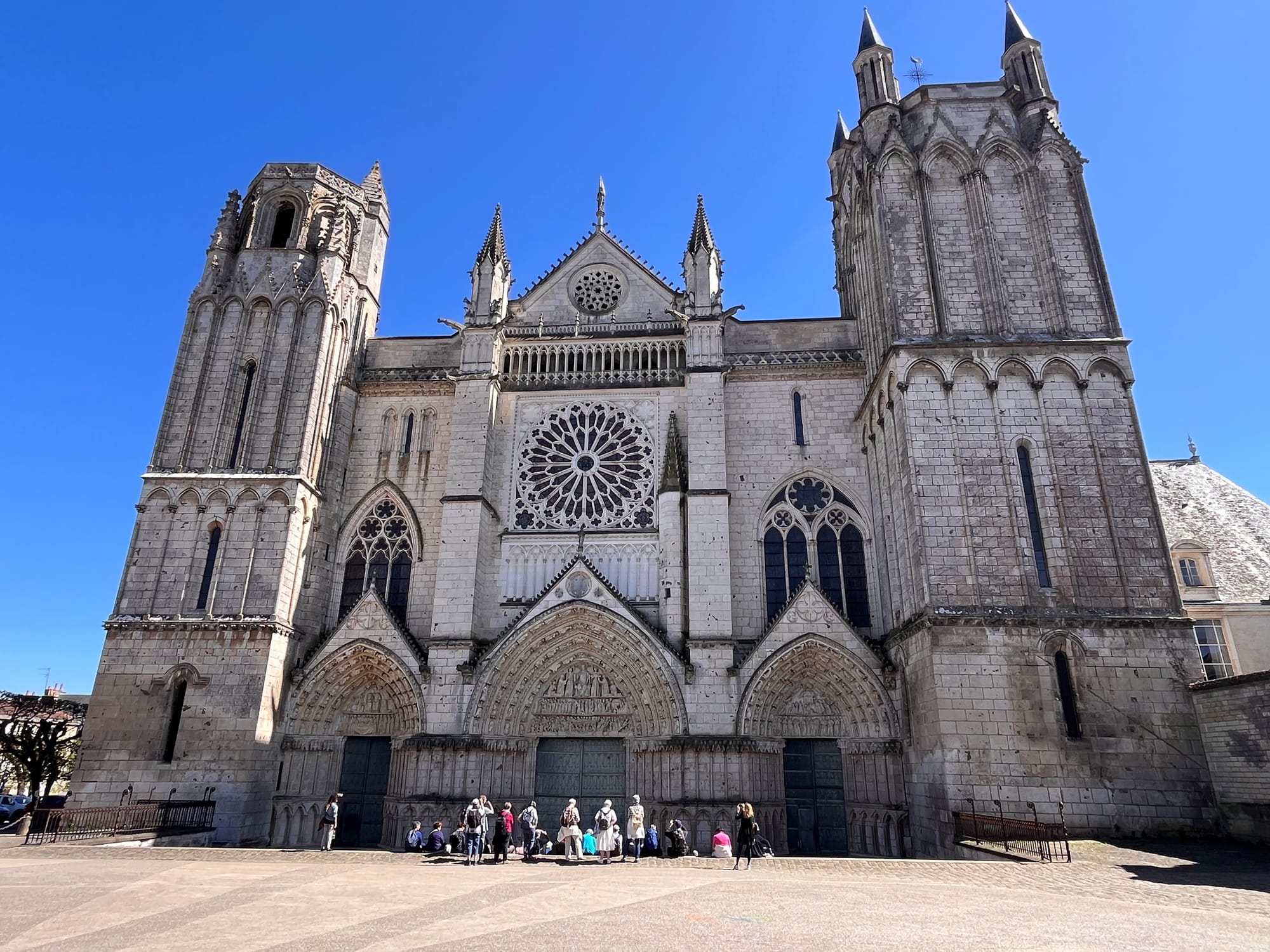
For five minutes at least! Henry the dashing young englishman who was duke of Normandy and count of Anjou (the Loire area etc) swept her off her noble feet. 30 years old and full of energy she was married again. This time in the cathedral down the royal road from the palace. So, next stop!
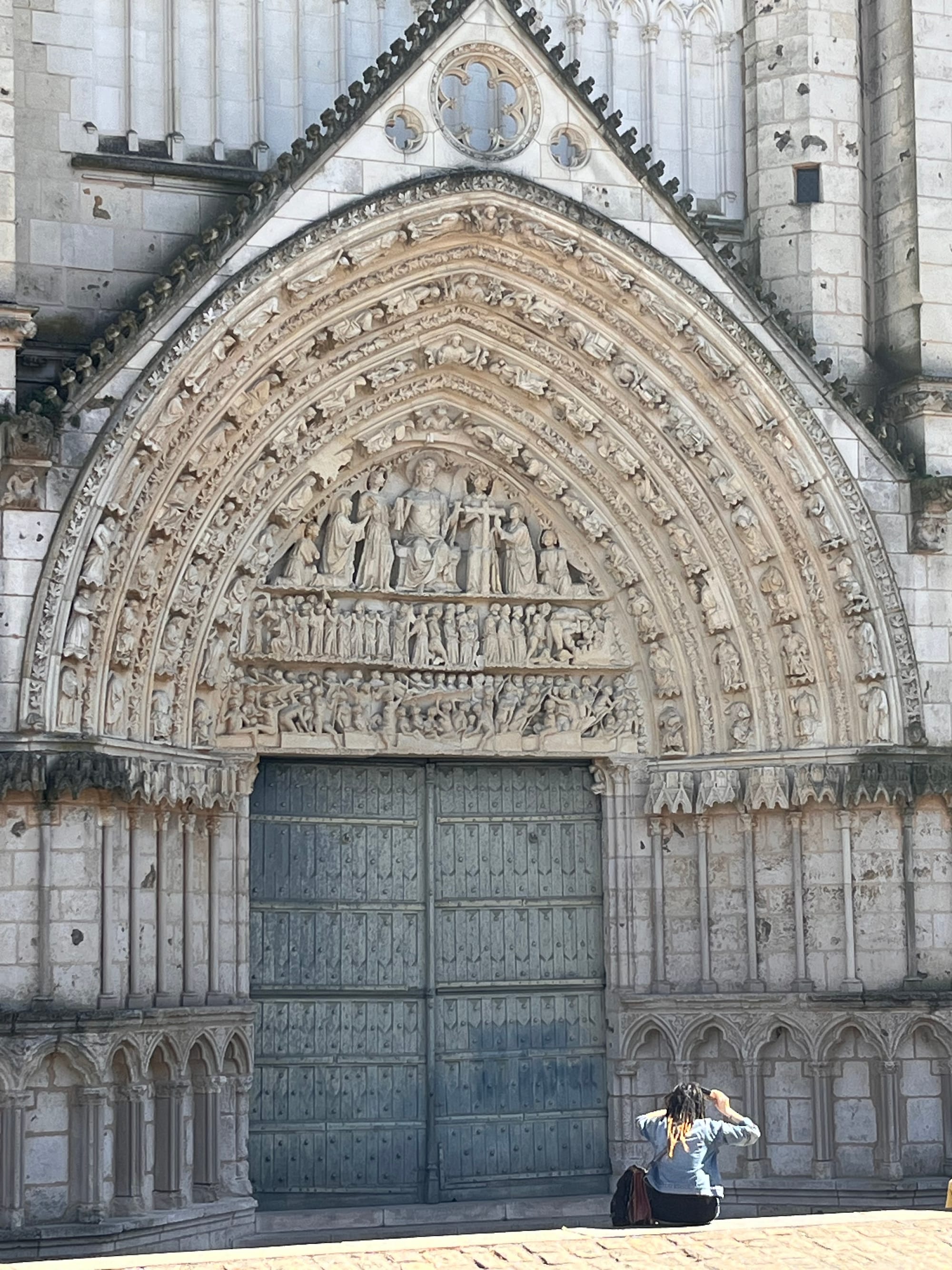
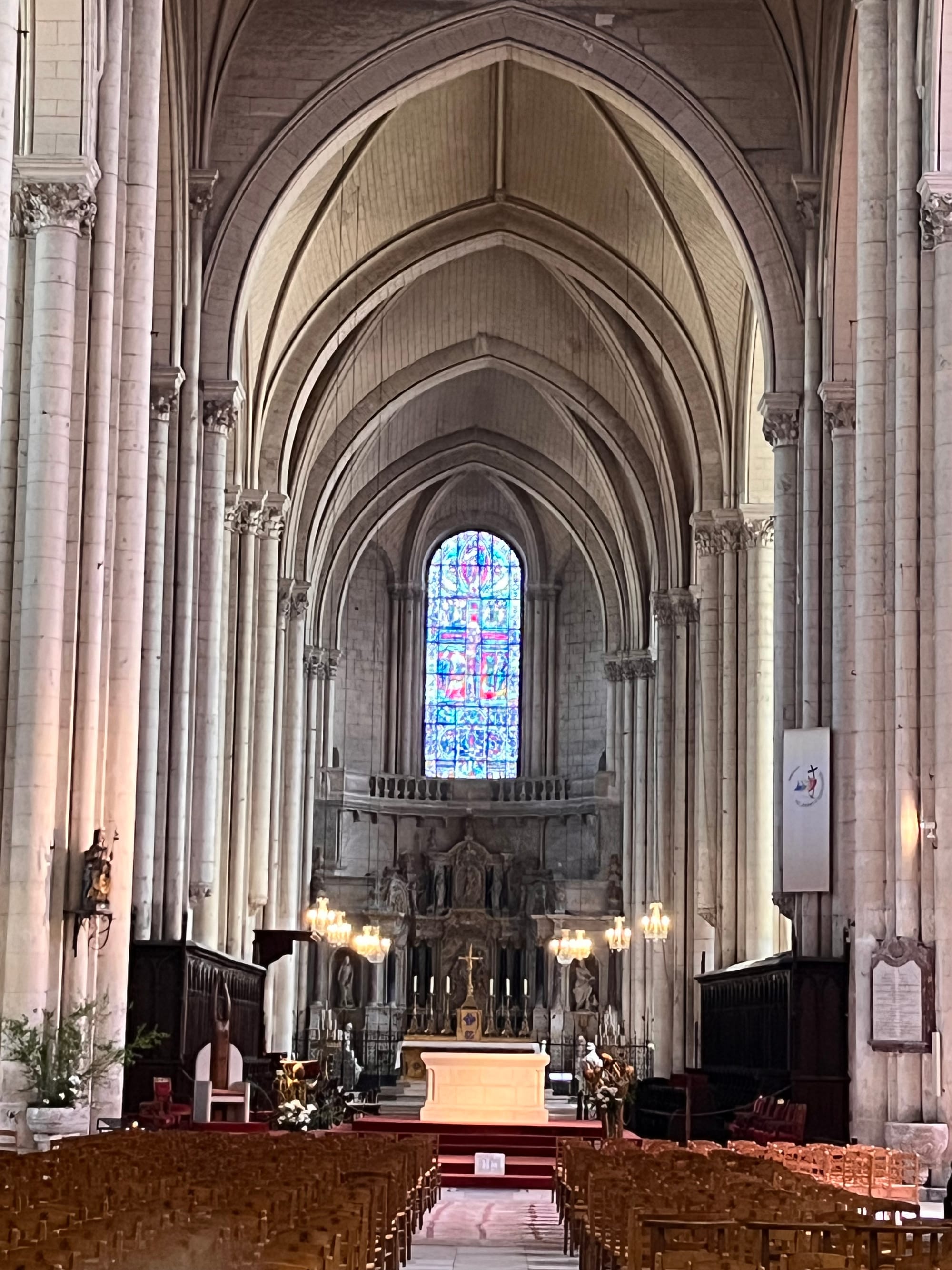
Turns out the cathedral is big and grand, and built by Henry and Eleonore some years after their marriage. So their ceremony would have been in the smaller, earlier one. The massive reno was hardly an act of piety, more likely a political power statement. Look who’s in charge here guys!
Did that marriage go well? For a while, at least. And they did manage to produce a brood of eight, including three kings to be.
Two years into the marriage the stakes went up: Henry became king of England. It was complicated, and there were civil wars and anarchies and uncles and cousins involved. Worth knowing is that Henry (II, as he became) is the great grandson of William the Conqueror, through his mother Matilda. There was a lot of squabbling over who’s turn it was next, but when Henry finally got the throne he kept it for 35 years. He was the first Plantagenet king (named because his father Geoffrey was the count of Anjou, and famous for wearing a little sprig of broom (planta genista) in his hat!)
So this management of the kingdoms and duchies kept Henry and Eleonore on the move for most of the nearly 4 decades of their marriage. It started well apparently, but fell into the usual royal mess of mistresses, ego and politics. But in this case even worse, because there was also rebellion in the family. Brothers and mothers against their father, there was no peace to have. Eleonore ended up spending much of the last 15 years of her marriage in some kind of house arrest, her husband had had enough.
Which brings us back to Poitiers, because when he died, in 1189 when Eleonore was 67 or so, she moved back to Poitiers and took charge again of her huge duchy. Officially the duke was Richard, her son, but he also had England, Normandy and Anjou to manage - so it was great having mum on board to help keep the ship afloat. She even ran things when he went off on crusade shortly after, and pulled some incredible strings to get him ransomed after he was taken prisoner during the crusade.
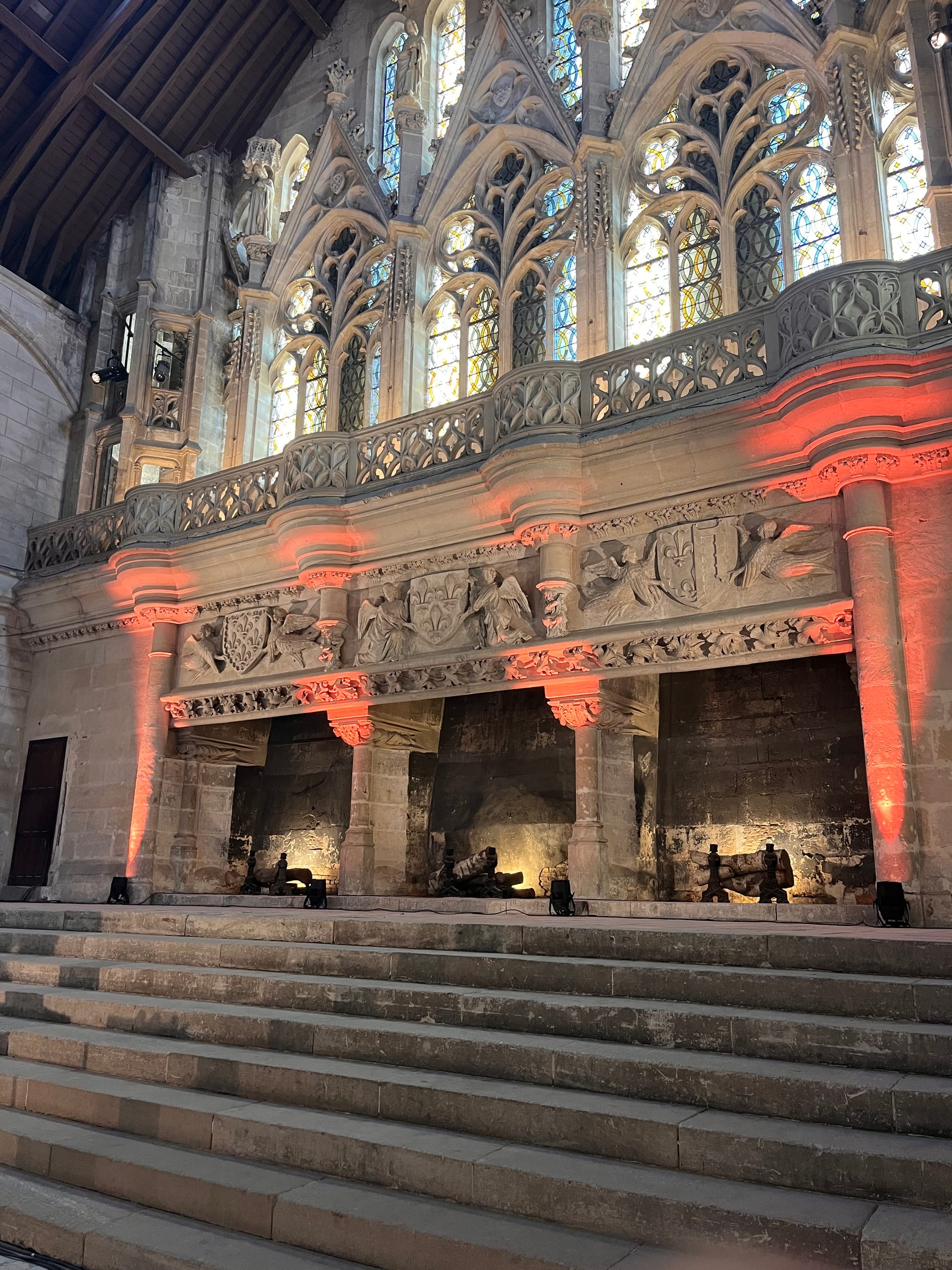
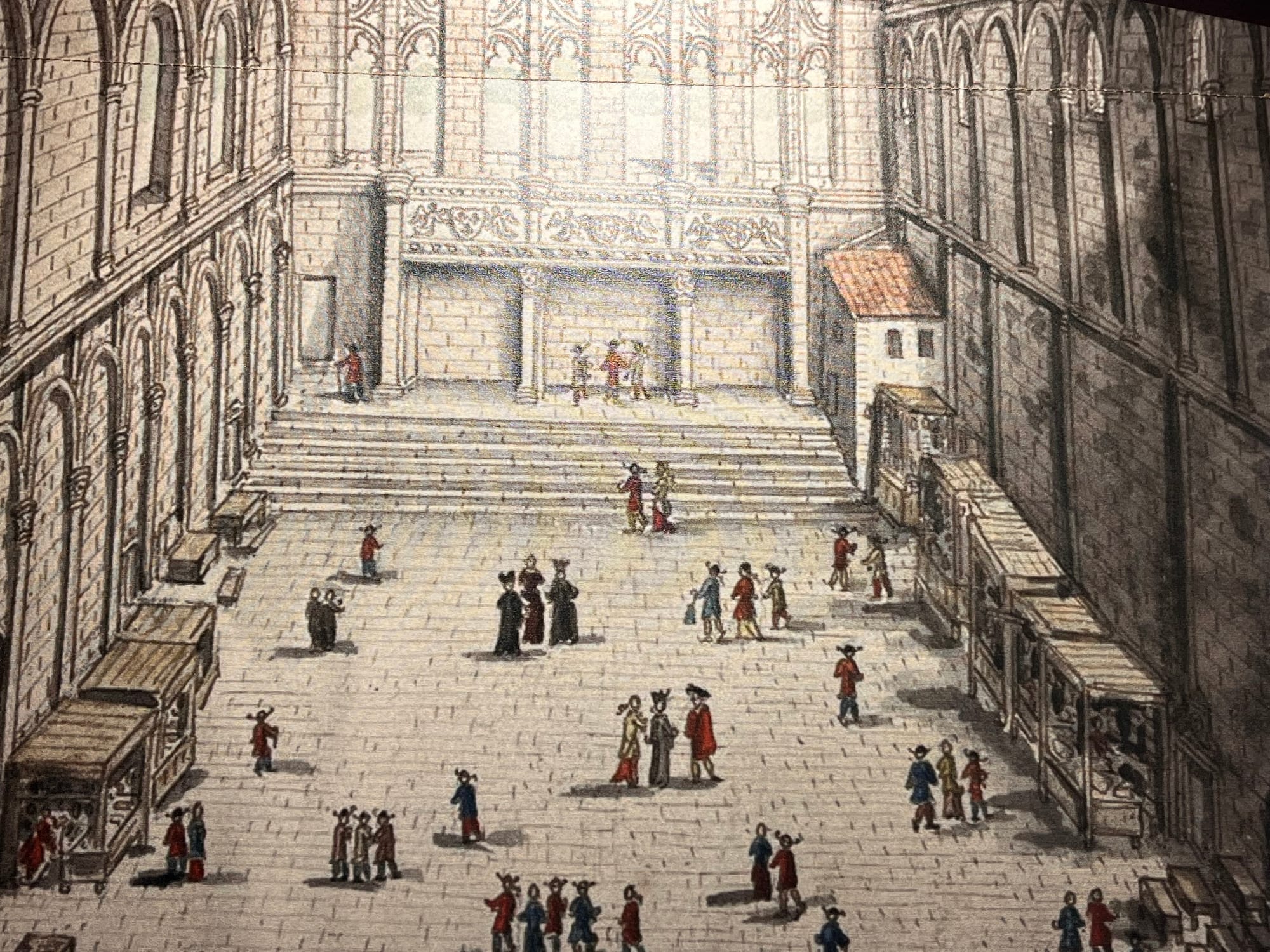
The stories just go on and on. So having looped around the palace, wandered down to the cathedral for a look (and seen a few other things along the way), I went back to the palace to have a look at the massive new hall she built after Henry died.
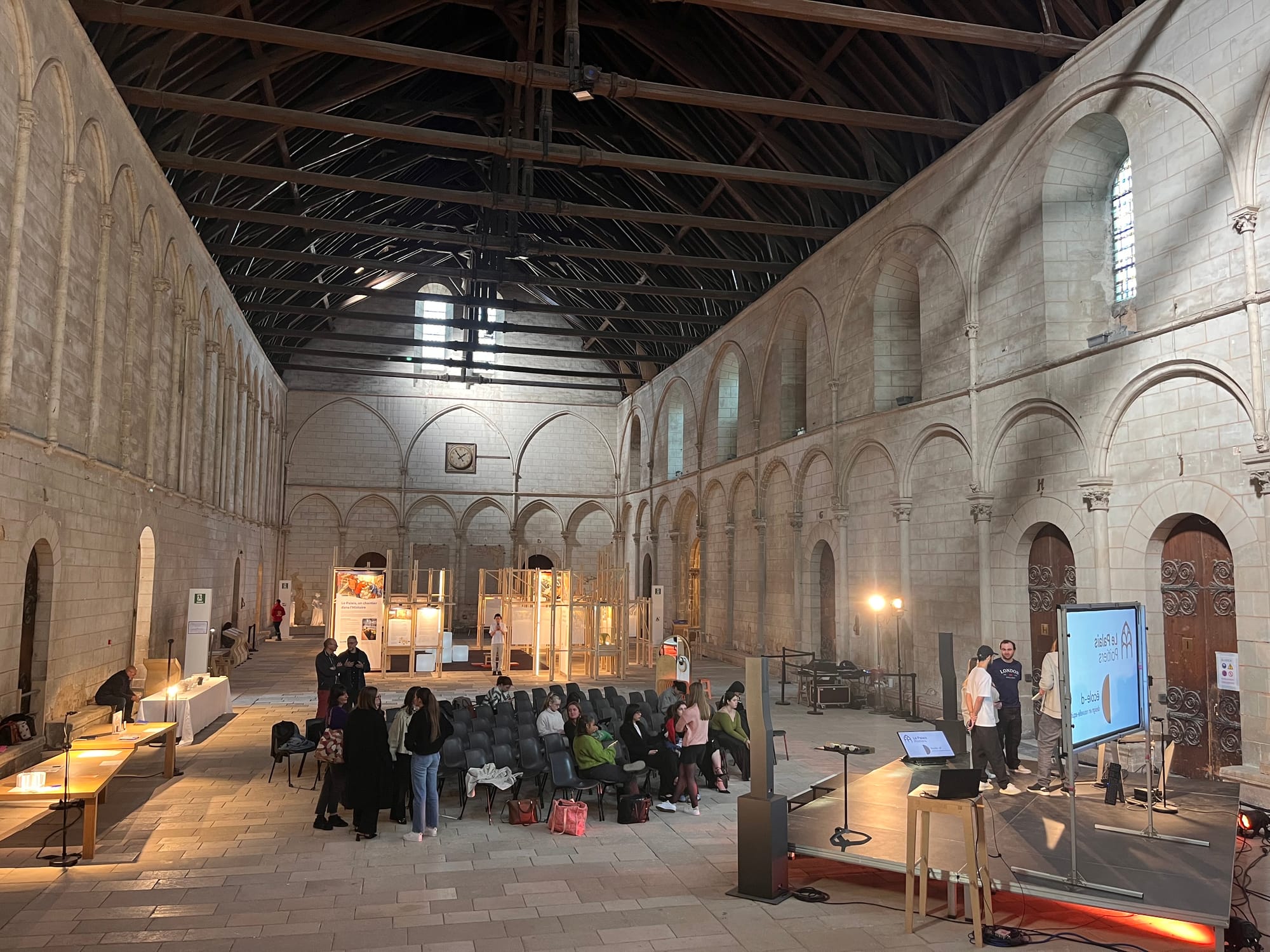
Not just any old hall, but a very beautiful hall that was said to be one of the biggest in Christendom. So big you couldn’t hear your footsteps! It’s the only part of the palace open these days, and I wandered in to find it full of students about to hold a seminar or something. The accoustics must be amazing, because the hall is used often for concerts and performances. Fascinating to see, where once justice, power, and status were the markers of history, now it is culture and community and knowledge. Warms my heart.
There’s more, and heaven knows how Eleonore kept up her energy until she was almost 80, because this day had already worn me out.
Did she die here in Poitiers? No, apparently not. She spent her very short retirement at the abbey in Fontevraud, which she had always dreamt of doing. And that’s the next port of call!