Spain, Santillana del mar

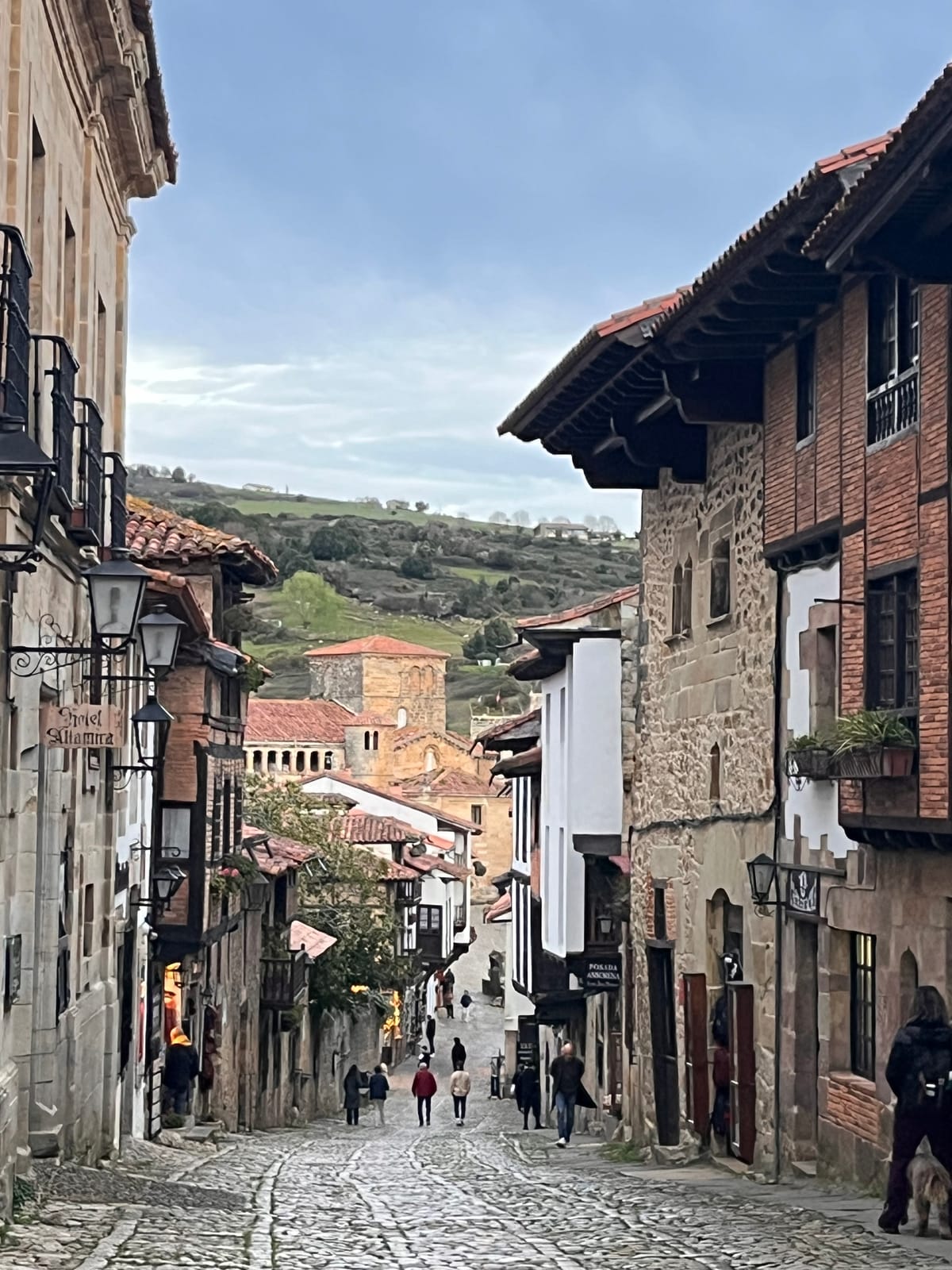
Sometimes you get really lucky, and this was one of these times. This little place is lovely, and so interesting. I came here because I had to fix the van at a workshop down the hill in Santander, and had a pin on my map I’d picked up from somewhere. So why not?
Also, it’s the only place on the iberian peninsula not being rained out at the moment, although we’ve had a little
So let’s do this in order, because there’s stuff here from the stone age and the middle ages. Not so much the romans and visigoths, so we get a break there
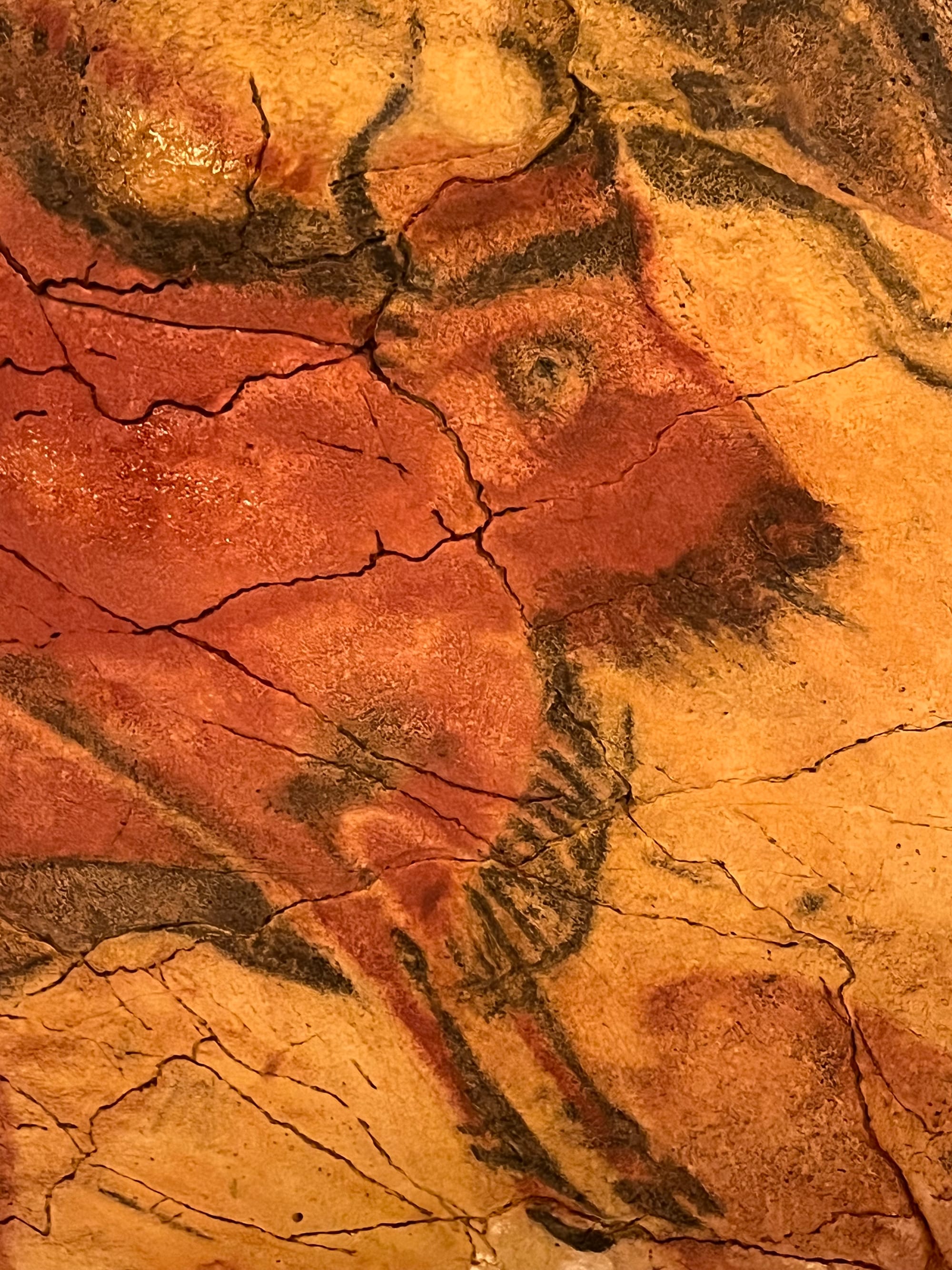
Turns out that there are some of the best paleolithic rock paintings in Europe up the road, who would have known? (Thanks Dave Rutherford for the tip!). In 1875 or so a local shepherd tipped off a wealthy fossilhunter, and as they excavated their way into the blocked cave they found, in a lower cave at the back, a whole chamber of handpainted bison, deer, and boars. Spectacularly well-preserved, because the cave entry had collapsed and closed
Of course the cave, of Altamira as its called, got completely overrun by a century of tourists; they’ve now closed it off and opened a pretty stunning copy. The paintings are all handmade using what is believed to be original methods and is truly incredible to see
I had it to myself much of the time, apart from a chattery bus tour of local seniors for a moment. The museum part is well done, I feel like for the first time I’ve got a grip on paleolithic, neolithic, neanderthal, and all these various ages of copper, bronze and iron
It’s like this. Very generally. The neanderthals were the early settlers in europe, they lived in small groups, and by 40,000 bc were pretty much done (competed out, inbreeding). The first humans turned up in this area around 30,000 bc, some moved into this cave! They did all the usual hunter-gatherer things, there were maybe 30 or so (but up to a hundred) people living in the cave, which would have been fine, its a big cave
This group is paleolithic, paleo=old, lithic=stone tools. They lived in the cave on and off for some 20,000 years until it caved in, and the times were changing. Neolithic was the new thing, new stone age, which means better tools, farming, and fixed settlements. That period lasted from round 5500 bc to 3000 bc around here. The neolithic guys made dolmens and menhirs, spiritual places and burial sites, there’s some just down the road I’ll go and have a look at tomorrow, if I can find them
So in these 20,000 years in the cave, the guys made a lot of paintings in the dark, back part of the cave. They painted new ones over old ones, each painting using the shape of the rock to give it volume. The best paintings are from the later years, which is still round 13,000 bc!, and are of bison and deer mainly. We don’t know why they painted what they did, could be for luck hunting, could be spiritual. But they are just magnificent
The process is fascinating too. First step is the artist etched an outline using a sharp stone. Then he used charcoal to do the contours and shading. Then he mixed a batch of ochre, the reddish powder paint, smeared it on his hands and then smeared them on the rocks. No varnish, just the cool dry air of the cave protecting them
So this village here was quiet and provincial for thousands of years, until the middle ages. In the 9th century (that’s when the Franks were taking over most of europe and the vikings were taking on the franks and the rest of europe), someone brought the relics of a local saint here, and built a monastery. Saint Juliana became Santillana, and the monastery became rich and famous and the town prospered as a result.
It’s really a great little town, super uncrowded at this time of year but apparently one of the best-preserved medieval towns in spain. I like it a lot, and am also really enjoying my campground just on the outskirts of town. It’s quiet and old school and the showers are (reasonably) hot. There’s a washing machine and I really should use it, but maybe another day
So I’m taking the chance to rest and regroup, I felt like I was fading a bit with being on the road for a few months, with the inland cold, the van problems and…the world. Day by day I really feel my energy coming back
So all good here, and I have a whole bunch of bones, stones, and stone age bits to drop off below if you’re curious
Adios!
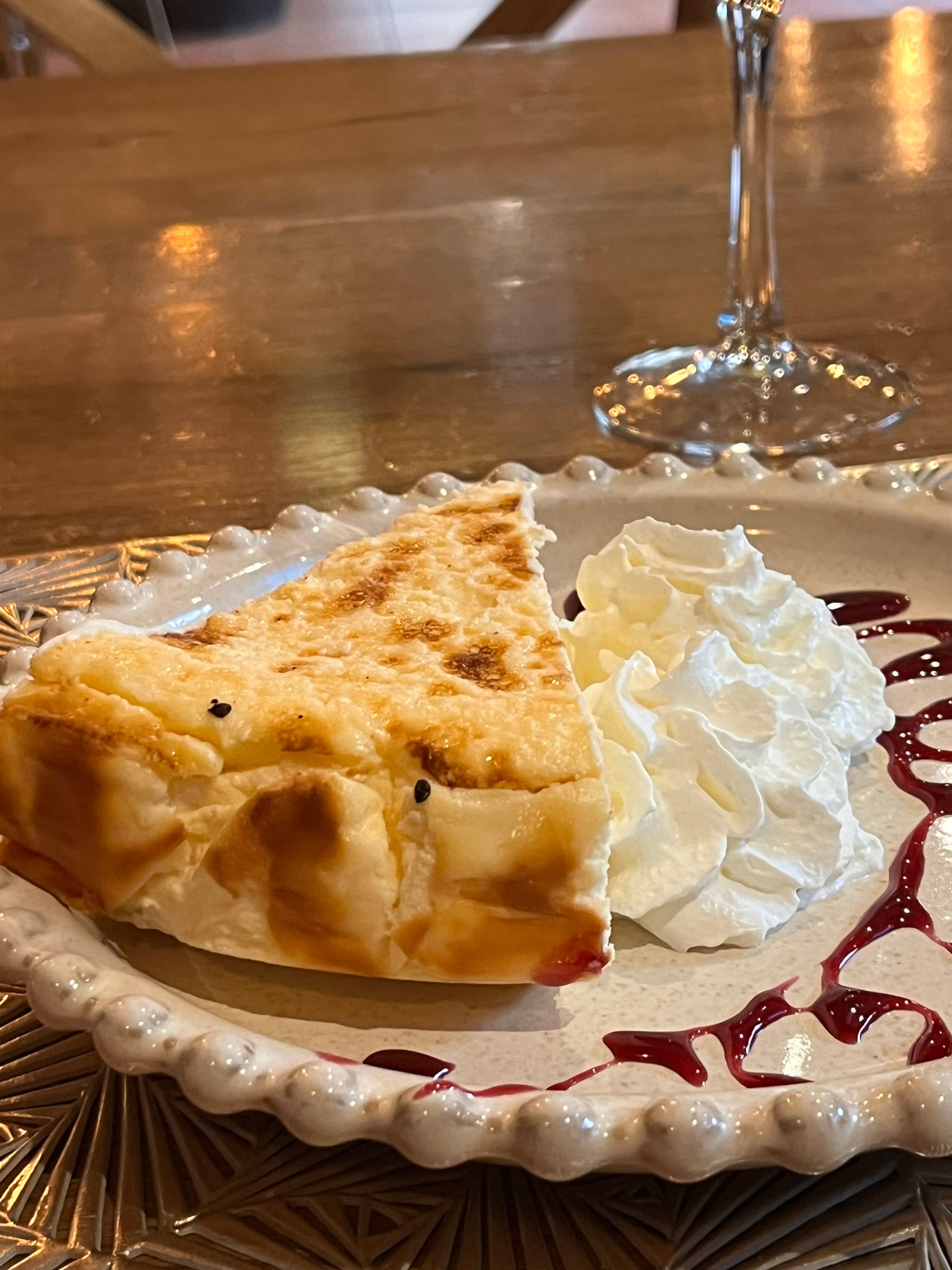
Oh, and these rolling green hills (which so much remind me of New Zealand), are famous for their cows, their milk, their cheese, and their…cheesecake!